Bottega Veneta released “Craft is Our Language” in May 2025, celebrating the 50th anniversary of its iconic Intrecciato leather weave. Image credit: Bottega Veneta
In 2025, luxury brands navigated a landscape defined less by records and more by recalibration.
The personal luxury goods market’s continued recovery remained slower than projected in main global regions, including the U.S. and China. Tightened discretionary spending accelerated the polarization between top buyers and aspirational consumers.
Stagnant macroeconomic conditions forced marketers to justify the relevance of their maisons beyond traditional status signaling, resulting in the release of fewer campaigns with higher impact. From product anniversaries to relaunched archival designs and origin stories that unfolded over the holiday season, heritage remained at the core of many campaigns and approaches to storytelling prioritized quality over quantity.
Luxury fashion houses invested in AI and A-list celebrity ambassadorships, as well as sports partnerships, immersive events and collaborations with major figures in art and film. Online resale channels proliferated as luxury shifted its focus towards India and the Middle East, upgrading in-store experiences with boutique openings and refreshed design concepts.
High-end automotive brands highlighted innovation and excellence alongside EVs. Legacy hospitality names emphasized wellness. Watchmakers leaned into provenance and, across industries, immersive experiences were a recurring theme.
As the new year begins, Luxury Daily is spotlighting the campaigns, activations and strategic initiatives that dominated 2025. Together, these efforts reveal how luxury brands responded to change by sharpening their identities and reasserting their value, setting new benchmarks for the year ahead.
Bottega Veneta, “Craft is Our Language” Last May, Italian fashion house Bottega Veneta launched “Craft is our Language,” a campaign celebrating 50 years of the maison’s iconic Intrecciato leather weave.
Photographed and directed by London-based creative Jack Davison, Bottega Veneta presented a series of black-and-white portraits depicting stars such as American actress Julianne Moore, Italian tennis player Lorenzo Musetti and Taiwanese actress Shu Qi.
The initiative featured a video choreographed by Paris-based dancer Lenio Kaklea, which showcased hand gestures and universal movements mimicking the interlacing of leather, emphasizing the physical act of creation and uplifting themes of togetherness.
“Craft is our Language” celebrates the 50th anniversary of the Intrecciato leather weave
Visual cues recalled Milanese artist and designer Bruno Munari’s 1963 handbook of Italian gestures, Supplemento al Dizionario. “Craft is our Language”alsoexplored the shared etymological root of the words “artist” and “artisan” — both terms are derived from the Latin “ars,” meaning art, skill and craft.
Beyond notable personalities, the campaign also features Bottega Veneta artisans, past and present: American fashion designer Edward Buchanan, the first design director to take the reins at Bottega Veneta, makes an appearance.
More than a commemorative exercise, “Craft is Our Language” signaled a cultural recalibration, presenting the house’s Intrecciato not simply as a signature technique, but as a living language that connects generations. The campaign aligns with a broader shift in luxury toward heritage-led storytelling; brands are increasingly turning inward and letting craftsmanship shine.
Glenmorangie, ‘Once Upon a Time in Scotland’ LVMH-owned Scotch whisky maker Glenmorangie transported audiences to its Highland home in 2025.
Glenmorangie launched a playful campaign starring American actor Harrison Ford titled “Once Upon a Time in Scotland” last January. The episodic series, directed by Australian actor and filmmaker Joel Edgerton, offered viewers an off-script look at the 180-year heritage behind the brand’s spirits.
Mr. Ford appears in 12 episodes, a hero film and still frames shot by Australian fashion photographer Lachlan Bailey.
American actor Harrison Ford fronts “Once Upon a Time in Scotland”
In video content, the Hollywood icon visits Glenmorangie’s distillery in Tain, Ardross Castle and the surrounding Highland landscapes. Engaging with the team and local traditions, he explores various expressions, luxury selections included.
One of these rare releases is featured in episode 10, “Teamwork,” where Mr. Ford sits among the workshop’s experts and sips Glenmorangie The Altus 25 Years Old, a limited-edition single malt envisioned by master distiller Dr. Bill Lumsden.
The star is seen enjoying other high-end selections, such as Glenmorangie Infinita 18 Years Old, across “Once Upon a Time in Scotland” clips; dropping Exclusive Collections several times a year, the maison joins other spirits producers that have pushed further into premium segments.
Pairing a globally recognized cinematic figure with its historic distillery, the digital excerpts distinguished Glenmorangie for its whiskies, artistry and Scottish roots.
“Harrison Ford is the real deal: a true global icon, and a genuine whisky lover,” said Caspar MacRae, president and CEO of The Glenmorangie Company, in a statement.
“It was a dream come true to collaborate on this campaign, and welcome him to our home in the Highlands to discover more about Glenmorangie,” Mr. MacRae said. “He is someone who has honed his craft over decades, which gives him a real appreciation for the dedication and skill of our distillery team.
“We hope whisky lovers around the world will enjoy exploring the episodes, and learning more about the real people and places behind our whiskies, through Harrison’s eyes.”
Top luxury campaigns of 2025: LVMH, F1 Last year, French luxury conglomerate LVMH’s historic 10-year partnership with Formula One unfolded into a series of high-visibility activations across the global motorsport competition’s calendar.
Rather than operating as a single-brand sponsorship, several of the group’s subsidiaries hosted F1 experiences. French fashion house Louis Vuitton (see story) assumed a central role as title partner.
The trophy trunks were handcrafted at Louis Vuitton's historical atelier in Asnières. Image courtesy of Louis Vuitton
Leading with the tagline “Victory travels in Louis Vuitton,” the maison designed bespoke trophy trunks crafted in monogram canvas for winners of the season-opening Australian Grand Prix race, held at Melbourne’s Albert Park Circuit.
Louis Vuitton also debuted trackside branding at F1 for the very first time, displaying signage during both the opening ceremony and podium presentations.
Louis Vuitton displayed trackside signage at F1 for the very first time. Image credit: LVMH
Tag Heuer (see story), Moët & Chandon and Moët Hennessy (see story) were also closely embedded in the sporting event’s environments and global broadcast moments.
As the event’s official timekeeper, Champagne and Cognac brands, respectively, the partners welcomed ambassadors, celebrities and other VIP guests into exclusive spaces throughout the season, appearing at street circuits, such as the Monaco Grand Prix, and at permanent road courses, including the Italian Grand Prix in Monza, alike.
LVMH’s debut F1 sponsorship year reflected a broader shift in luxury marketing towards sporting events with international reach, demonstrating how heritage houses can benefit from these high-visibility engagements that unite global fans.
“The people, the quest for excellence and the passion for innovation are at the heart of the activity of our Maisons and Formula 1,” said Bernard Arnault, chairman and CEO of LVMH, in a statement.
“In motorsport as in fashion, watchmaking or wines and spirits, every detail counts on the path to success,” Mr. Arnault said. “Both in our workshops and on circuits around the world, it is this incessant search to break boundaries that inspires our vision, and this is the meaning that we want to bring to this great and unique partnership between Formula 1 and our Group.”
Rolls-Royce, Phantom Centenary British automaker Rolls-Royce (see story) marked the 100th anniversary of its Phantom model in 2025, honoring the nameplate in a yearlong global campaign centered on cultural legacy and bespoke craftsmanship.
Introduced in 1925, Phantom has served as the marque’s pinnacle model across eight generations. To commemorate the centenary, Rolls-Royce rolled out a series of coordinated activations that positioned the flagship vehicle as a symbol of the brand’s engineering standards and creative ambitions.
Rolls-Royce celebrated 100 years of the Phantom in 2025
At the product level, every Phantom hand-crafted at the Home of Rolls-Royce in Goodwood during the anniversary year was completed with a special centenary chassis plaque. Bespoke commissions played a central role in the centenary narrative.
One-of-one Phantoms inspired by couture, Japanese cherry blossoms, Chinese mythology and historic mural art demonstrated how the Phantom continues to function as a blank canvas for client expression. These projects highlighted the growing importance of Rolls-Royce’s Private Offices, opened in several markets across the globe, from the Americas to the Middle East (see story).
The marque also unveiled the Phantom Centenary Private Collection, a limited run of 25 highly customized vehicles designed to reference key moments, figures and materials associated with Phantom’s 100-year history, in October.
The vehicles feature a 24-carat gold-plated version of the brand’s Spirit of Ecstasy figurine. Image credit: Rolls-Royce
Live experiences supported the campaign beyond commissions and collections. Rolls-Royce staged appearances at major international events, including the Concorso d’Eleganza Villa d’Este, the Goodwood Festival of Speed and Pebble Beach Concours d’Elegance, to showcase historic and contemporary Phantom models.
The British automaker also revisited Phantom’s presence in music, film and art, referencing figures such as Elvis Presley, John Lennon and Andy Warhol in content and staging symbolic moments such as the recreation of a famously submerged Phantom, pointing to the car’s place in popular culture (see story).
All year long, the marque anchored the anniversary of its most important nameplate in craftsmanship, personalization and cultural relevance. Marking 100 years of Phantom alongside the $370 million expansion of its Goodwood production site (see story) allowed Rolls-Royce to showcase its leadership in the sector’s bespoke future.
Burberry, ‘It’s Always Burberry Weather’ In 2025, British fashion house Burberry extended its “It’s Always Burberry Weather” campaign, which takes its tagline from the archives.
The second and third installments of the effort involve “Postcards from London,” launched in October, and “London in Love,” introduced earlier in the year as the house’s summer campaign.
Together, the releases positioned Burberry’s trench coats and rainwear as cultural constants, designed not just for protection, but for life in motion, using film, humor and everyday London landmarks to communicate the brand’s outerwear heritage.
Directed by John Madden, “Postcards from London” followed the experiences of first-time visitors navigating the city, with Academy Award-winning actress Olivia Colman portraying a range of local characters encountered along the way.
“Shakespeare in Love” director John Madden captured “It’s Always Burberry Weather: Postcards from London”
“London in Love” expanded the narrative, presenting a series of seven films inspired by late 1990s and early 2000s British romantic comedies. Featuring an ensemble cast that included Kate Winslet, Aimee Lou Wood, Jodie Turner-Smith, Nicholas Hoult, Liu Wen and Naomi Campbell, the films centered on small, rain-soaked moments of romance and connection, supported by Burberry’s long-standing relationship with unpredictable British weather.
“It’s Always Burberry Weather: London in Love” plays on Britain's oft-unpredictable weather
Beyond film, the “It’s Always Burberry Weather” extended into physical retail through immersive window displays, in-store activations and heritage-inspired pop-ups. Floral installations, architectural references to London and travel-themed interiors echoed the campaigns’ storytelling.
Across both chapters, Burberry focused on the trench coat as the cornerstone of its identity.
Styles crafted from gabardine woven in Yorkshire appeared alongside lighter summer iterations and reworked silhouettes, reminding audiences of the brand’s origins in performance fabric innovation while signaling the house’s continued evolution under creative director Daniel Lee.
Rolex, ‘Reach for the Crown’ Dubbed “Reach for the Crown,” Swiss watchmaker Rolex released its first-ever docuseries last year.
The title, a play on Rolex’s distinctive logo and past slogans such as “A Crown for Every Achievement,” linked all facets of the campaign, from print ads to billboards, together.
The video project offered an intimate look at individuals striving for the pinnacle of their fields.
“Reach for the Crown” premiered in 2025
Each episode connected viewers to Rolex Testimonees; the luxury brand expanded this network in 2025, adding names such as actor Leonardo DiCaprio (see story), actress Zendaya, opera singer Jakub Józef Orliński, alpine skier Camille Rast and conservationist Kris Tompkins to the distinguished group.
Rolex deployed Reach for the Crown films and behind-the-scenes content across traditional and digital channels, combining cinematic storytelling with social media amplification. Exclusive screenings added an experiential element to the launch.
With a commitment to excellence as its throughline, Rolex presented itself as a partner in professional milestones with “Reach for the Crown.” By plugging the personal narratives of Testimonees, lending audiences access to some of the biggest global figures in sports, science and the arts in the process, the brand elevated its watches beyond objects of luxury, framing them as markers of achievement.
Hublot, 20th anniversary of Big Bang Two decades ago, Swiss watchmaker Hublot introduced the Big Bang collection, disrupting the category by design.
The oversized chronographs sported unapologetically industrial facades, featuring raw hardware marked by exposed screws and a commanding bezel. It also made use of unconventional materials, marrying precious metals with carbon fiber, ceramic and rubber.
Since then, the Big Bang has evolved through continual material experimentation and genre-defying complications. An equally audacious campaign celebrated the line’s 20th anniversary in 2025.
For it, Hublot casts Choupette, the beloved, internet-famous feline of late Chanel design magnate Karl Lagerfeld, hiring Dutch photographer and director Carlijn Jacobs to capture the cat.
Launched May 1, Big Bang’s anniversary campaign unfolded through high-fashion visuals interspersed with meme-style content and behind-the-scenes moments. From “failed” takes to Choupette’s diva behavior, the creative deliberately rejected the hyper-polished tropes of traditional luxury advertising in favor of self-aware, low-filter storytelling.
Staying rooted in a founding spirit of rebellion, the campaign also debuted the brand’s new tagline, “Own It.”
This aesthetic extended across TikTok and Instagram, where Choupette modeled the Big Bang 20th Anniversary Red Magic, followed by additional executions featuring the Yellow Neon Saxem tourbillon and Titanium Ceramic editions, worn by archetypal figures — a mysterious fashion-forward woman and a powerful athlete — each embodying a different facet of Hublot’s identity.
Hublot’s 20th-anniversary campaign for the Big Bang strengthened its claim as a brand fluent in both horology and digital culture.
Crediting the collection as what the brand calls the first truly iconic watch of the 21st century, Hublot’s anniversary campaign rises to the top of last year’s releases. It mirrored the unpredictability of the products at its core, using humor to stake its claim at the intersection of horology and digital culture.
Hublot introduced a series of five limited-edition Big Bang anniversary models in 2025. Image credit: Hublot
The modern brand advanced anniversary marketing beyond the standard retrospective, instead opting to make a statement about where contemporary luxury is headed.
“The Big Bang represents a revolution in watchmaking, a perfect union of tradition and modernity,” said Julien Tornare, CEO of Hublot, in a statement.
“While remaining rooted in the values of luxury watchmaking, such as artisanal quality and attention to detail, Hublot has managed to position the Big Bang as a disruptor within an industry that has traditionally seen little design innovation,” Mr. Tornare said. “This is what sets us apart.”
YSL Beauty, ‘Don't Call It Love’ Using a short film that turned one of the genre’s most familiar tropes — the Parisian love story — into a vehicle for social critique, France’s YSL Beauty staged one of luxury’s most pointed social interventions last year.
Launched March 6, 2025, “Don’t Call It Love” used cinematic storytelling to expose the warning signs of intimate partner violence (IPV).
The film served both as a storytelling device and an educational tool, urging audiences to recognize behaviors that are often normalized yet can escalate into physical, sexual, emotional or psychological harm.
Timed to coincide with International Women’s Day, the initiative advanced YSL Beauty’s five-year commitment to addressing intimate partner violence (IPV), a form of abuse affecting one in three women globally.
“Don’t Call It Love” launched in tandem with International Women’s Day 2025
At first glance, the film appears to follow the expected codes of high-end beauty advertising: glamorous settings, an attractive couple and an aura of effortless romance. As it unfolds, however, unease gradually surfaces; subtle gestures of control, manipulation and isolation are woven into the visuals, hiding in plain sight.
The narrative abruptly halts and rewinds, exposing nine warning signs of abuse that had been hidden in plain sight. The film’s creative development was guided by director Léa Ceheivi, cinematographer Nicolas Loir and lead consultant Dr. Sara Kuburic, a psychotherapist.
“Don’t Call It Love” extended the reach of YSL Beauty’s Abuse Is Not Love program, launched in 2020. To date, the program has donated more than $6 million to grassroots NGOs and trained or supported over 1.3 million people across more than 25 markets.
While many luxury brands anchor their ESG strategies in sustainability or diversity, YSL Beauty’s sustained focus on the oft-stigmatized social issue of domestic and intimate partner violence sets it apart.
Strategically, “Don’t Call It Love” subverted the timeless tropes of beauty advertising to create emotional dissonance, using seduction, style and atmosphere to draw audiences in before delivering a reality check.
Taking this approach, YSL Beauty inserted itself directly into a cultural fault line, versus simply attaching its logo to a cause, advancing purpose-driven marketing beyond symbolic messaging
Dior, Lady Art #10 French fashion house Dior recently dedicated its platform to artistry as part of an anniversary celebration.
Last fall, the maison commemorated the 10th edition of the Dior Lady Art project (see story). First launched a decade ago, the annual design initiative transforms the Lady Dior bag from a signature accessory into a canvas, inviting contemporary artists to reinterpret the house’s iconic design through their own mediums; the bags are produced in limited runs.
For the milestone edition, Dior enlisted a group of international artists, including Jessica Cannon, Patrick Eugène, Eva Jospin, Ju Ting, Lakwena, Lee Ufan, Sophia Loeb, Inès Longevial, Marc Quinn, and Alymamah Rashed, each contributing a distinct perspective shaped by personal, cultural and material narratives.
Through each of their hands, the Lady Dior becomes a storytelling object: Mr. Quinn, a visual artist from the U.K., returned to the project with five designs, including a gold version etched with Monsieur Dior’s fingerprint and others featuring AI-generated human irises and orchid motifs.
Ms. Longevial also participated; the French painter translated her emotive portraits into embroidered faces and feather-crowned patchworks, while the Kuwait-born Mr. Rashed drew on the textures of Failaka Island to create bags inspired by sand, sea and the native Humaith flower.
Elsewhere, Mr. Ufan’s minimalist, monochrome pieces echoed his brushstroke aesthetic, Mr. Eugène wove pearls, raffia and bamboo into bags as tributes to his Haitian heritage and London-based artist Lakwena layered pop-inflected slogans and metallic leathers into graphic, message-driven designs.
Dior extended the project beyond physical design with a dedicated podcast series, offering a behind-the-scenes look at the artists’ inspirations and creative processes in audio form to connect audiences with the project’s conceptual foundations.
The label also collaborated with luxury publishing house Rizzoli on a retrospective print volume, set for release this February (see story).
Since the inception of the Dior Lady Art project in 2016, the French fashion house has recruited more than 100 artists, from Judy Chicago to Marc Quinn, to redesign the classic top-handle bag.
Louis Vuitton, Murakami re-edition Two decades after one of fashion’s most influential collaborations first emerged, French luxury house Louis Vuitton reunited with Japanese contemporary artist Takashi Murakami for an extensive re-edition that spanned the entire year.
The Louis Vuitton × Murakami re-edition launched Jan. 1, 2025, marking the 20th anniversary of the original partnership that first introduced the world to the kaleidoscopic Monogram Multicolore and Mr. Murakami’s whimsical kawaii characters applied to the house’s iconic canvas. The final collection consisted of more than 200 pieces released across three distinct chapters.
Chapter One kicked off in January with over 170 creations featuring the Monogram Multicolor in 33 colors, the playful Superflat Panda character and the Superflat Garden motif. Louis Vuitton supported the launch with immersive activations across seven global cities, including a Soho pop-up in New York City.
Drawing inspiration from Tokyo’s modular hotels, the Soho location featured distinct color-coded zones, an exhibition of archival pieces from 2003-2006, a cinema screening remastered Superflat films and a retail experience where purchases unlocked tokens for an oversized vending machine stocked with branded collectibles.
A dedicated care station for original Louis Vuitton × Murakami pieces plugged the house’s commitment to collector culture and restoration, ensuring the longevity of its customers’ archival designs.
The Louis Vuitton × Murakami collection reimagines more than 200 pieces. Image courtesy of Louis Vuitton
Chapter Two arrived in March, celebrating spring and Japan’s cherry blossom season. The collection centered on Mr. Murakami’s Cherry Blossom motif, rendered across more than 40 pieces from bags to fragrances.
House ambassador Zendaya returned for the campaign, photographed by Inez and Vinoodh. The final chapter launched in May alongside Louis Vuitton’s 2025 Resort collection, introducing over 70 summer-focused pieces.
Highlights included a new white Monogram colorway with 3D-printed Cherry icons, the full Capucines range with intricate Cherry detailing, a blue denim capsule and footwear featuring Cherry-shaped heels. Campaign imagery transported Ms. Zendaya to the Mediterranean Riviera, surrounded by giant-scale renderings of the smiling Cherry motif.
Aligning product drops with seasonal relevance — multicolor for winter, cherry blossoms for spring, summery cherries for resort season — Louis Vuitton structured the re-edition as a year-long narrative. The campaign demonstrated how luxury houses can mine their archives not merely for nostalgia but as proof of enduring creative vision.
Where many brands struggle to make heritage feel urgent, Louis Vuitton used technological advancement, celebrity ambassadorship and experiential retail to bridge past and present.
Most significantly, the re-edition validated the original collaboration’s prescience: what began as former creative director Marc Jacobs’ bold decision to rework the sacred Monogram for the first time in history has become recognized as a seminal moment in 21st-century collector culture, one that continues to transcend stylistic trends across generations.
Review Luxury Daily's Top Luxury Campaigns of 2024 here.


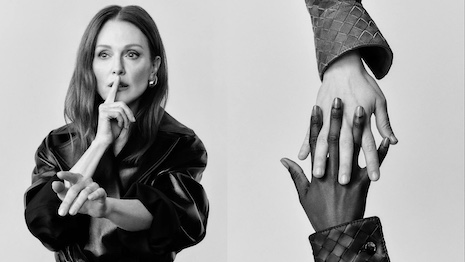
 Bottega Veneta released “Craft is Our Language” in May 2025, celebrating the 50th anniversary of its iconic Intrecciato leather weave. Image credit: Bottega Veneta
 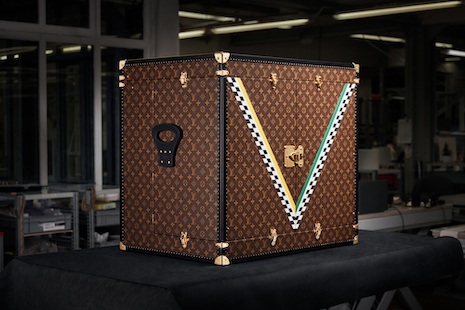 The trophy trunks were handcrafted at Louis Vuitton's historical atelier in Asnières. Image courtesy of Louis Vuitton
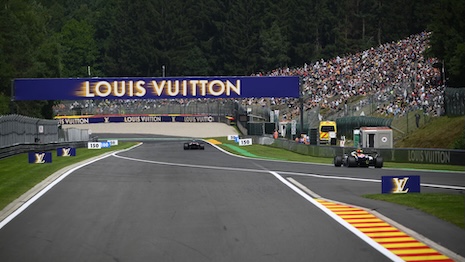 Louis Vuitton displayed trackside signage at F1 for the very first time. Image credit: LVMH
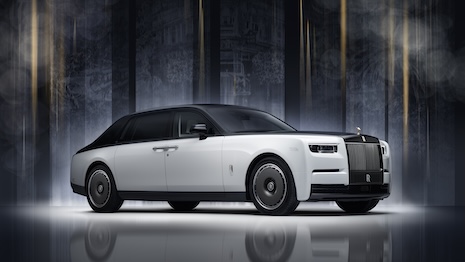 The vehicles feature a 24-carat gold-plated version of the brand’s Spirit of Ecstasy figurine. Image credit: Rolls-Royce
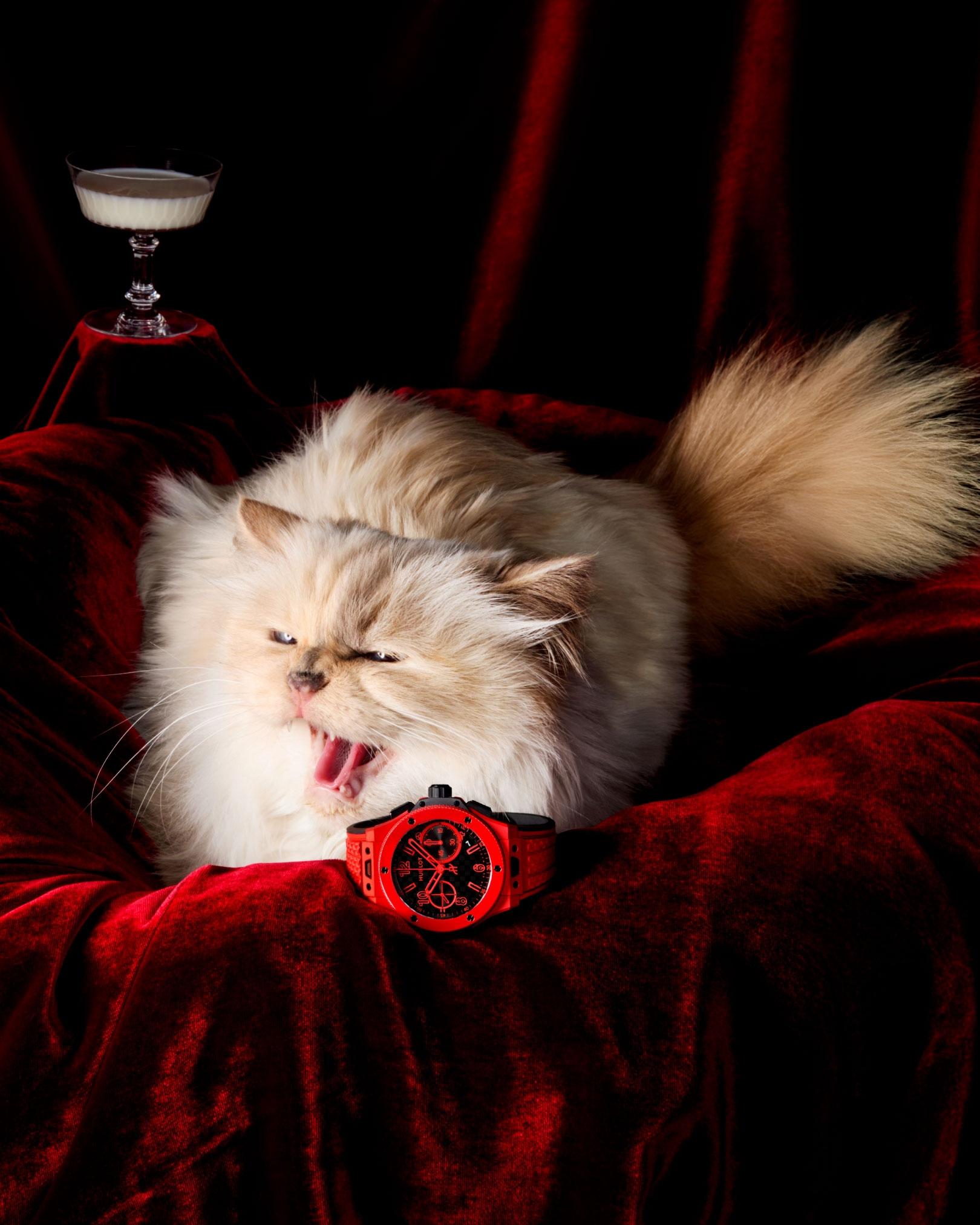 Dutch photographer Carlijn Jacobs captures internet-famous feline Choupette. Image credit: Hublot
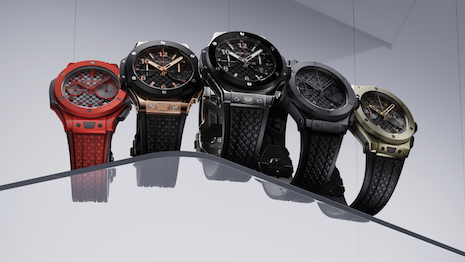 Hublot introduced a series of five limited-edition Big Bang anniversary models in 2025. Image credit: Hublot
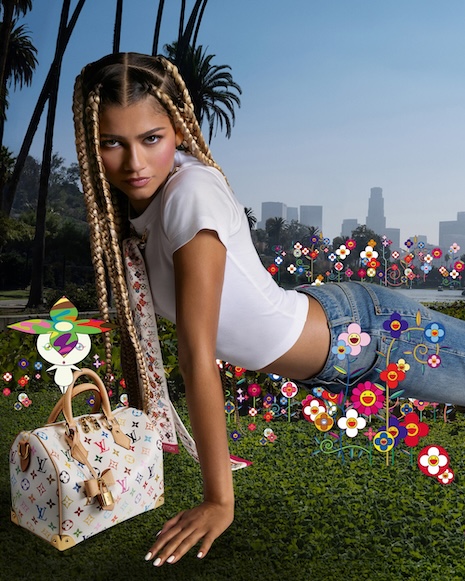 The Louis Vuitton × Murakami collection reimagines more than 200 pieces. Image courtesy of Louis Vuitton